Events
FSUE “Rosmorport” shares its plan for development of a digital dockyard at the Onega Shipyard at the Arctic – Regions Forum
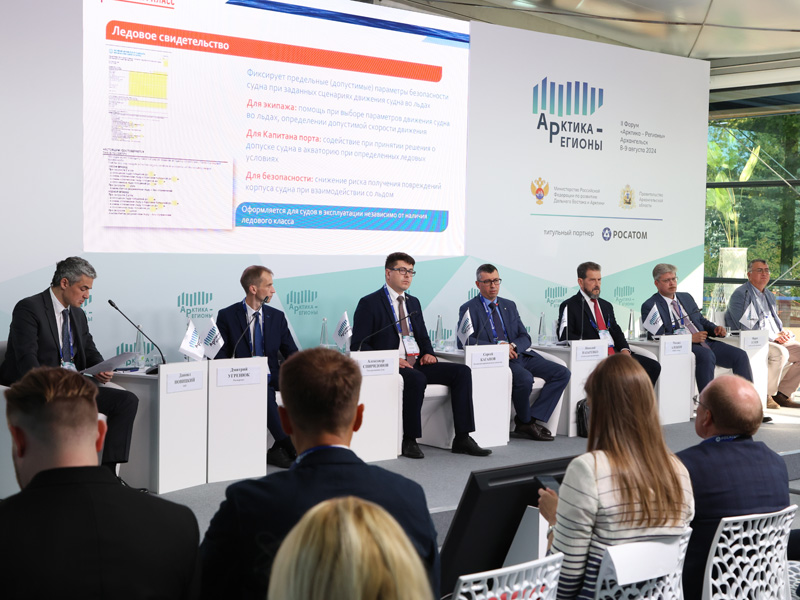
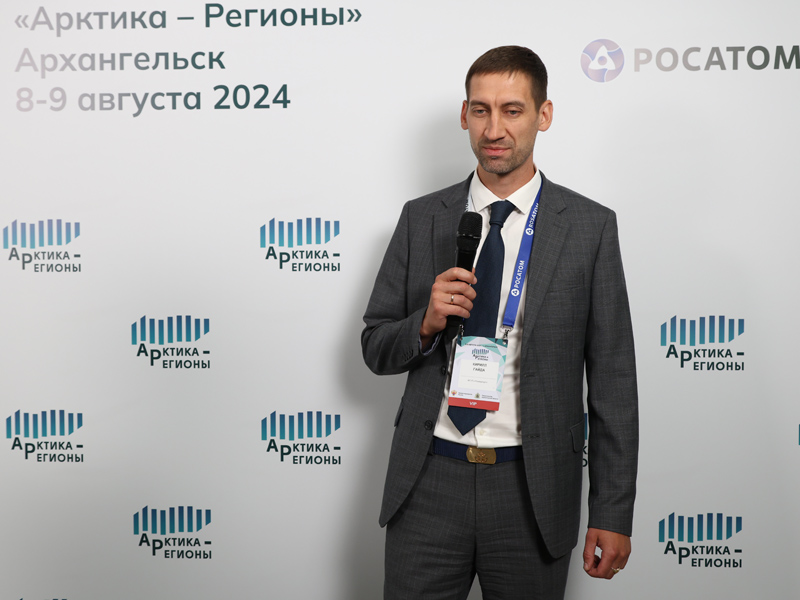
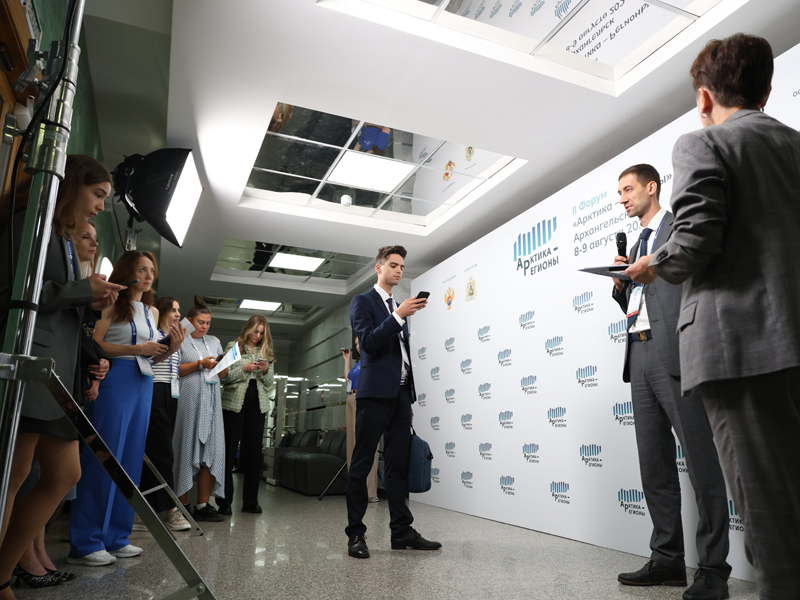
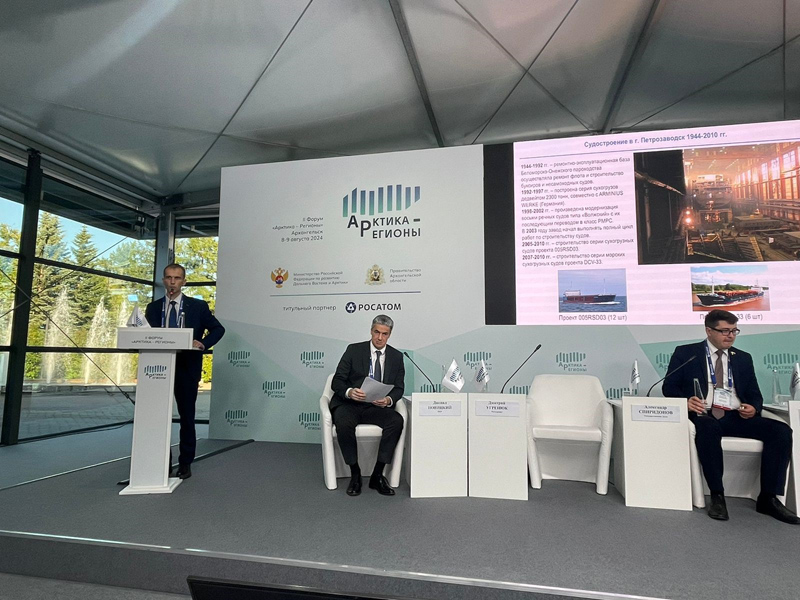
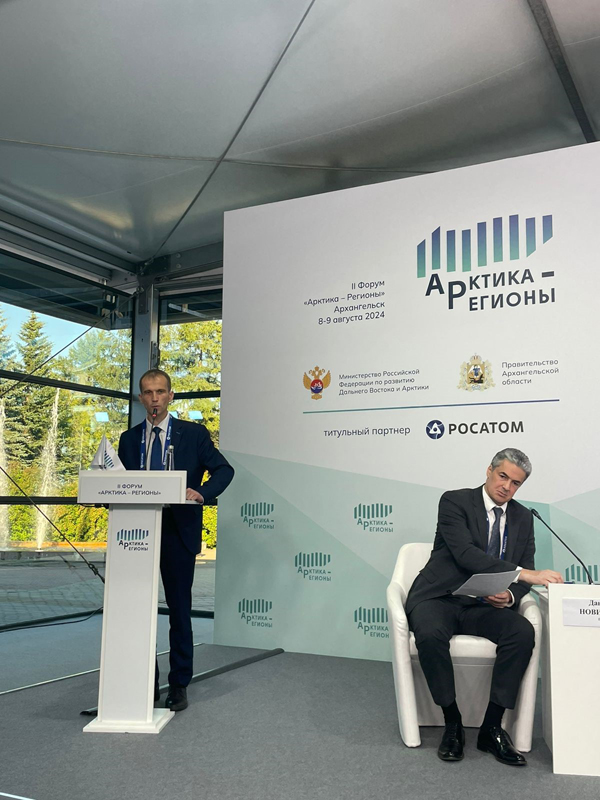
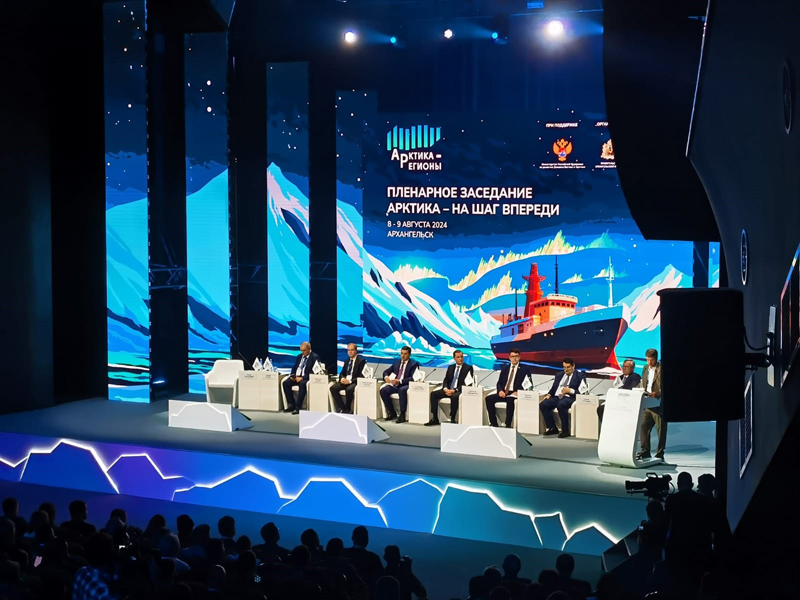
The delegation of FSUE “Rosmorport”, consisting of Kirill Gaida, Deputy General Director for Navigation Safety, Dmitry Ugrenyuk, Adviser to the Deputy General Director for Fleet, Vladimir Sedykh, Director of the Arkhangelsk Branch of the enterprise, and Vladimir Khokhlov, Deputy Director for Fleet of the Arkhangelsk Branch, participates in the II Forum Arctic – Regions. The event is being held with support of the Ministry of the Russian Federation for the Development of the Far East and the Arctic from August 8 to 9 in Arkhangelsk.
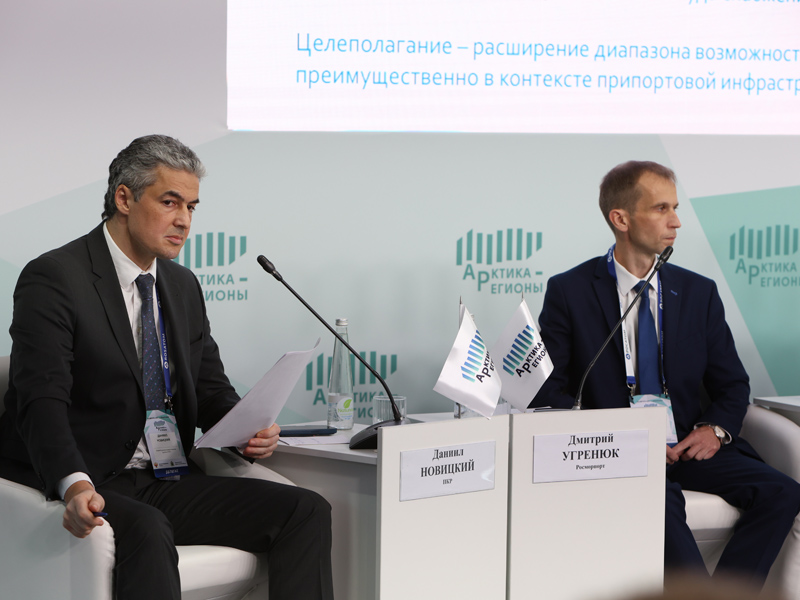
At the practical session “Construction of Merchant Fleet and Marine Equipment for the Arctic” Dmitry Ugrenyuk made a report on the creation of a digital dockyard at the Onega Shipyard — the leading enterprise in Karelia, focused on the construction of technical fleet, primarily for the Arctic regions.
In 2021, the creation of the first digital dockyard began on the basis of the Onega Shipyard in order to introduce advanced production technologies for the construction of modern vessels. The project was financed under the state program “Transport System Development”.
“According to the project, labor productivity will be raising by at least 2 times and in the number of vessels built at the plant will be increasing from 3 to 8 annually due to the construction of a new block of hull shops and infrastructure facilities, as well as the introduction of digital support for shipbuilding, robotization and automation of production processes,” the Adviser to the Deputy General Director for fleet of FSUE “Rosmorport” said.
Among the digitally controlled technologies that will be introduced at the Onega Shipyard during a thorough modernization, Dmitry Ugrenyuk mentioned a new line for the manufacture of flat sections with robotic welding, which will significantly increase the volume of processed metal due to accelerated manufacture of flat sections of the vessel. Also, for the first time, a complex of universal robotic laser arc welding will be installed at the Onega Shipyard. It will allow for the manufacturing of shipbuilding structures using a new type of high-efficiency welding.
At all stages of production, ship-metric systems will be implemented to assess in advance the assemblability of vessel structures and make necessary adjustments to the production process, support the docking of sections and blocks in the hull of the vessel. An automated overhead crane, without a crane operator, will make it possible to search, move and load sheet metal onto the conveyor of the metal pretreatment line at the command of a line operator.
Industrial monitors will be installed at each production site of a hull shop block to visualize the assembly process and display a 3D model of the vessel or the assembled structure directly at the workplace, and engineering and technical workers will be equipped with special protected tablets.
It is planned to introduce control and monitor systems for technological and engineering equipment, as well as identification and traceability systems at the shipyard, which allow for walkthrough control over quality and origin of materials, components and work results. Workers will be identified via contactless cards at each unit of new process equipment to provide detailed information on time and quality of work.
At the second stage of modernization in 2024-2026, the reconstruction of an open slipway and an inclined slip with the increase in their carrying capacity for launching and lifting innovative vessels of the Arctic fleet will be financed; dredging to the design marks of the operational water area will be carried out; a new building for electrical engineering and construction industries with the placement of an automated warehouse of vessel equipment will be built. The warehouse of the shipyard will be equipped with modern automated pallet and elevator storage systems, and the search and delivery of products for production will be automated through the use of digital warehouse management solutions. The shipyard will also feature robotic equipment for cleaning and painting vessel hulls, which will help to increase efficiency, reduce the time and cost of cleaning and painting vessel hulls on the shipyard's slipway.
“After the project has been completed, the Onega Shipyard should become one of the representative enterprises of the industry, where digital technologies will be used to the maximum extent in the construction of vessels. At least 600 new high-performance jobs will be generated at the shipyard, and all production processes will comply with environmental and industrial safety standards,” Dmitry Ugrenyuk noted.
For reference:
The Onega Shipyard CJSC was established in Petrozavodsk in 2002. After the bankruptcy of the shipyard in 2012, the Government of the Russian Federation decided to transfer its asset complex to FSUE “Rosmorport” and create Onega Shipyard LLC at its production facilities.
From 2015 to 2021, the enterprise placed orders at the shipyard for the construction of 19 vessels with a total cost of more than 6 billion rubles, and also secured funding for the restoration of the production cycle and expansion of production capacities through a contribution to the shipyard's assets. In 2019, FSUE "Rosmorport" carried out the corporatization of the shipyard and created the Onega Shipyard JSC.
Currently, the production program of the Onega Shipyard includes a series of four live crab carrier for the Russian Crab Group, two of which have already been transferred to the customer. By order of FSUE “Rosmorport”, two shallow-draft icebreakers of 22740M project, two oil garbage collectors of NE028 project and three tugs with ARC4 ice class with the capacity of 2 MW are being built at the shipyard.